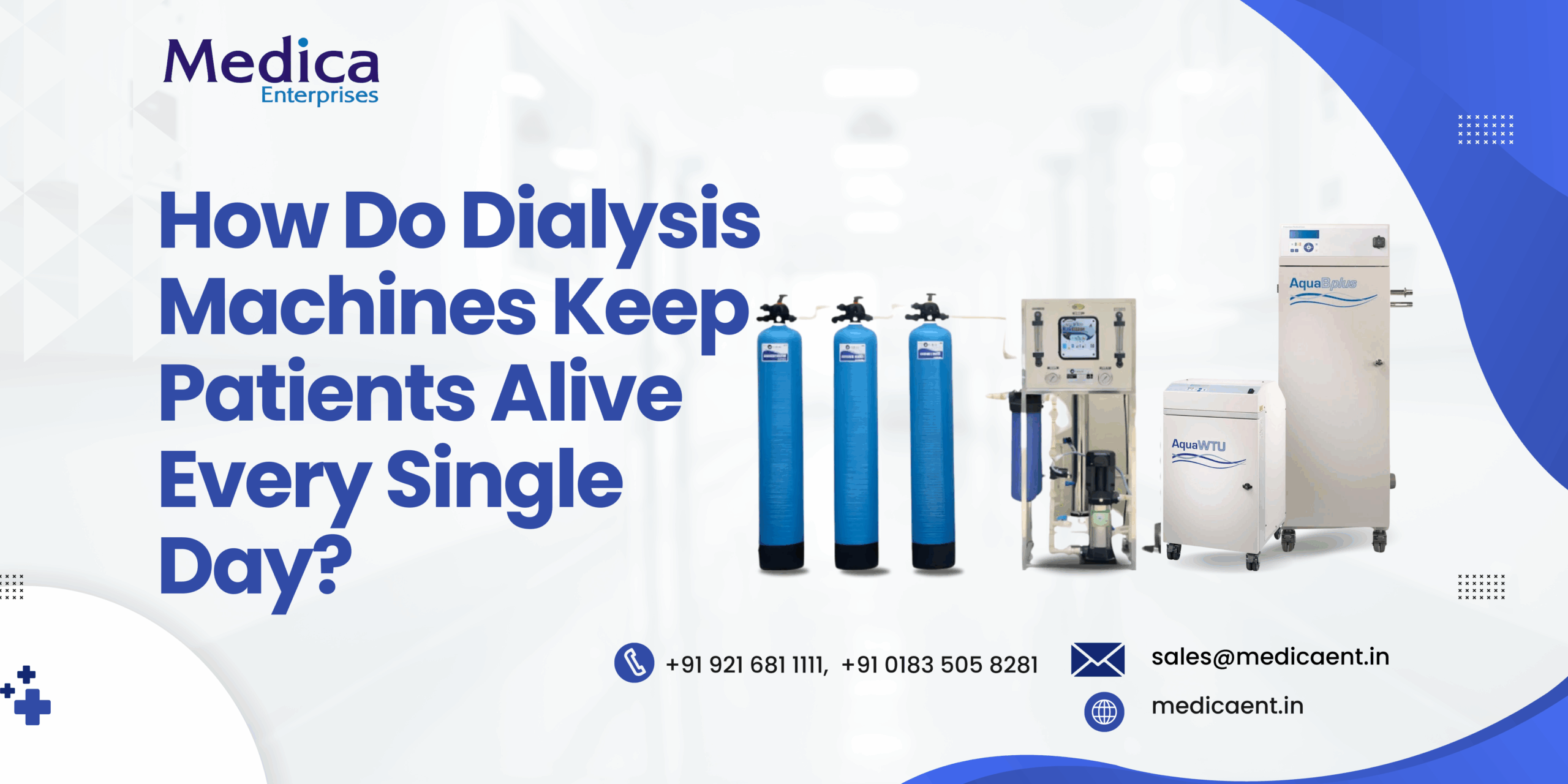
For some whose kidneys can no longer perform their normal filtering functions, dialysis becomes a lifeline.
Every day, thousands of people depend on these devices to carry out functions like toxin removal, fluid stability, and electrolyte balance that their systems are incapable of doing.
Without this system, waste products like urea and excess fluid would quickly build up in the circulation, causing major problems and even deadly diseases.
As an artificial kidney, dialysis machines carry out the vital purification tasks that keep patients alive and able to function.
They preserve the internal balance of the body, which is essential for the proper operation of the heart, muscles, and nerves. This includes stable blood chemistry, safe potassium levels, and adequate hydration.
Dialysis is more than just a treatment; it is a daily lifeline between kidney function loss and survival.
Improvements in dialysis technology have allowed patients to live longer, healthier, and more comfortable lives, proving the potential of medical innovation to save lives.
Inside a Dialysis Machine—How It Works
A dialysis machine acts as an artificial kidney when the kidneys are unable to filter blood. It eliminates waste, surplus salts, and fluids through a process called diffusion and ultrafiltration.
The dialyzer, a fine-fibered cartridge that eliminates toxins from the blood while maintaining vital components, is its main component. The device carefully controls blood flow, pressure, and temperature and features built-in alarms to ensure safety at all times.
One of the most crucial parts of healthcare is maintaining stable patient lives and clean blood, and dialysis machines can assist with both. The seamless fusion of state-of-the-art technology and medical accuracy makes this possible.
The Technology That Makes It Possible
Modern dialysis machines are more than just medical devices—they are intelligent systems designed for precision and safety. Today’s advanced dialysis equipment features real-time monitoring, automated pressure controls, and smart sensors that adjust treatment based on each patient’s condition.
Brands like Fresenius Medical Care have revolutionized this field with innovations that enhance patient comfort, reduce treatment time, and ensure consistent blood purification. In India, the adoption of these advanced dialysis technologies has made life-saving treatment more efficient and accessible than ever.
From automated fluid balancing to touch-screen interfaces, every upgrade reflects a single goal—to make dialysis safer, smoother, and more reliable for patients who depend on it every single day.
The Human Side of Dialysis
Behind every dialysis machine is a story of resilience—patients who show up multiple times a week, spending hours connected to a lifeline that keeps their blood clean and their bodies functioning. But it’s also a story of compassion—the nurses, technicians, and nephrologists who monitor every session with care and precision.
Modern dialysis isn’t just about technology; it’s about restoring dignity and giving patients the ability to live fuller lives despite kidney failure. From reducing fatigue to improving mental well-being, the right dialysis setup can make a world of difference.
Every successful treatment is a reminder that dialysis doesn’t just sustain life—it empowers it.
The Future of Dialysis Care
Dialysis technology is rapidly evolving to make treatments more efficient, comfortable, and personalized. Today’s innovations include wearable dialysis devices, AI-powered monitoring systems, and home hemodialysis units that allow patients greater independence and flexibility.
Engineers and healthcare experts are also focusing on biocompatible membranes and automated fluid management, reducing complications and improving outcomes.
As these advancements continue, the goal is clear—to make dialysis not just a life-sustaining therapy but a life-enhancing one. The future holds hope for millions relying on these machines every single day.
Conclusion—The Lifeline Beyond Machines
Dialysis machines are much more than medical equipment—they are lifelines that sustain patients when their kidneys can no longer perform their vital functions. Behind every session lies advanced technology, expert care, and precision engineering working together to give patients more time and a better quality of life.
As dialysis care continues to evolve, the focus remains on improving comfort, safety, and accessibility for every individual in need.
At Medica Enterprises, we’re proud to support this mission by providing advanced dialysis technology and reliable equipment that help hospitals and dialysis centers deliver the best possible patient outcomes.