When we think of hospitals, we picture advanced machines, skilled doctors, and life-saving medicines. But behind every successful treatment lies something simple yet vital—pure, contamination-free water.
From dialysis machines and sterilization units to laboratory testing, water plays a critical role in maintaining hygiene, accuracy, and patient safety. A single trace of impurity or microbial contamination can disrupt hospital operations or even endanger lives.
That’s where medical-grade RO (reverse osmosis) systems step in—quietly working behind the scenes to ensure every drop of water meets the highest purity standards. These systems have become the invisible backbone of modern healthcare, ensuring that hospitals deliver not just treatment but safe, reliable care every single day.
The Role of Water Purity in Patient Safety
In a hospital environment, every drop of water matters. Whether it’s used for dialysis, laboratory tests, or sterilizing instruments, impurities can pose serious risks to patient safety. Even small traces of bacteria, endotoxins, or heavy metals can lead to infections, inaccurate diagnostic results, or equipment malfunction.
This is why hospitals today rely on medical-grade RO systems—engineered to meet strict healthcare standards. These systems use multiple filtration stages, including reverse osmosis membranes, UV sterilization, and deionization, to produce ultra-pure, bacteria-free water suitable for medical use.
From dialysis units to operating rooms, pure water ensures that patients receive care without hidden risks. In critical treatments like hemodialysis, where water directly interacts with blood, the quality of water can literally decide patient outcomes.
How Do Medical-Grade RO Systems Differ from Regular RO Systems?
While household RO systems are designed for safe drinking water, medical-grade RO systems go far beyond basic purification. In hospitals and dialysis centers, water must meet stringent international standards like AAMI and ISO 13959, ensuring it’s free from microorganisms, endotoxins, and chemical impurities.
A medical-grade RO system uses multiple advanced stages—including pre-filtration, activated carbon, reverse osmosis membranes, UV disinfection, and ultrafiltration—to achieve ultra-pure water that’s safe for direct contact with the human body.
Unlike domestic systems, these units are built for precision, consistency, and safety. They feature automatic monitoring, continuous conductivity checks, and sterilization cycles to maintain purity even under heavy, 24/7 hospital usage.
In short, while regular RO systems make water drinkable, medical-grade RO systems make it life-sustaining.
The Growing Need for RO Systems in Modern Healthcare
Modern hospitals depend on pure water as a critical component of patient safety and treatment quality. From dialysis and laboratory testing to instrument sterilization and ICU care, every department relies on uncontaminated, mineral-balanced water to function effectively.
With the rising number of patients suffering from chronic kidney disease (CKD) and the expansion of dialysis centers across India, the demand for medical-grade RO systems has increased dramatically. Even minor water impurities can disrupt dialysis treatment or damage sensitive medical equipment, making purification technology non-negotiable.
Beyond dialysis, RO systems ensure the accuracy of diagnostic results in labs and extend the life of sterilization and disinfection units. Hospitals in regions like Punjab, North India, and Jammu are now prioritizing certified RO systems to maintain hygiene, meet regulatory standards, and protect patients from infection risks.
Key Benefits of Medical-Grade RO Systems for Hospitals
Medical-grade RO systems go far beyond ordinary purification—they are engineered to meet the strict hygiene and performance standards required in healthcare. Here’s how they make a difference:
1. Unmatched Purity for Patient Safety: These systems eliminate bacteria, endotoxins, heavy metals, and dissolved solids that could interfere with treatments like dialysis or contaminate medical instruments.
2. Consistent Water Quality for Equipment Longevity: Advanced filtration ensures consistent purity levels, protecting critical machines such as dialysis units, sterilizers, and analyzers from scaling and corrosion—reducing maintenance costs.
3. Compliance with Medical Standards: Certified RO systems are designed to meet AAMI and ISO water quality standards, helping hospitals maintain regulatory compliance and pass audits effortlessly.
4. Sustainability & Efficiency: Modern designs incorporate energy recovery and low-reject water technology, allowing hospitals to save water while ensuring maximum purification efficiency.
How Medica Supports Hospitals with Reliable RO Technology?
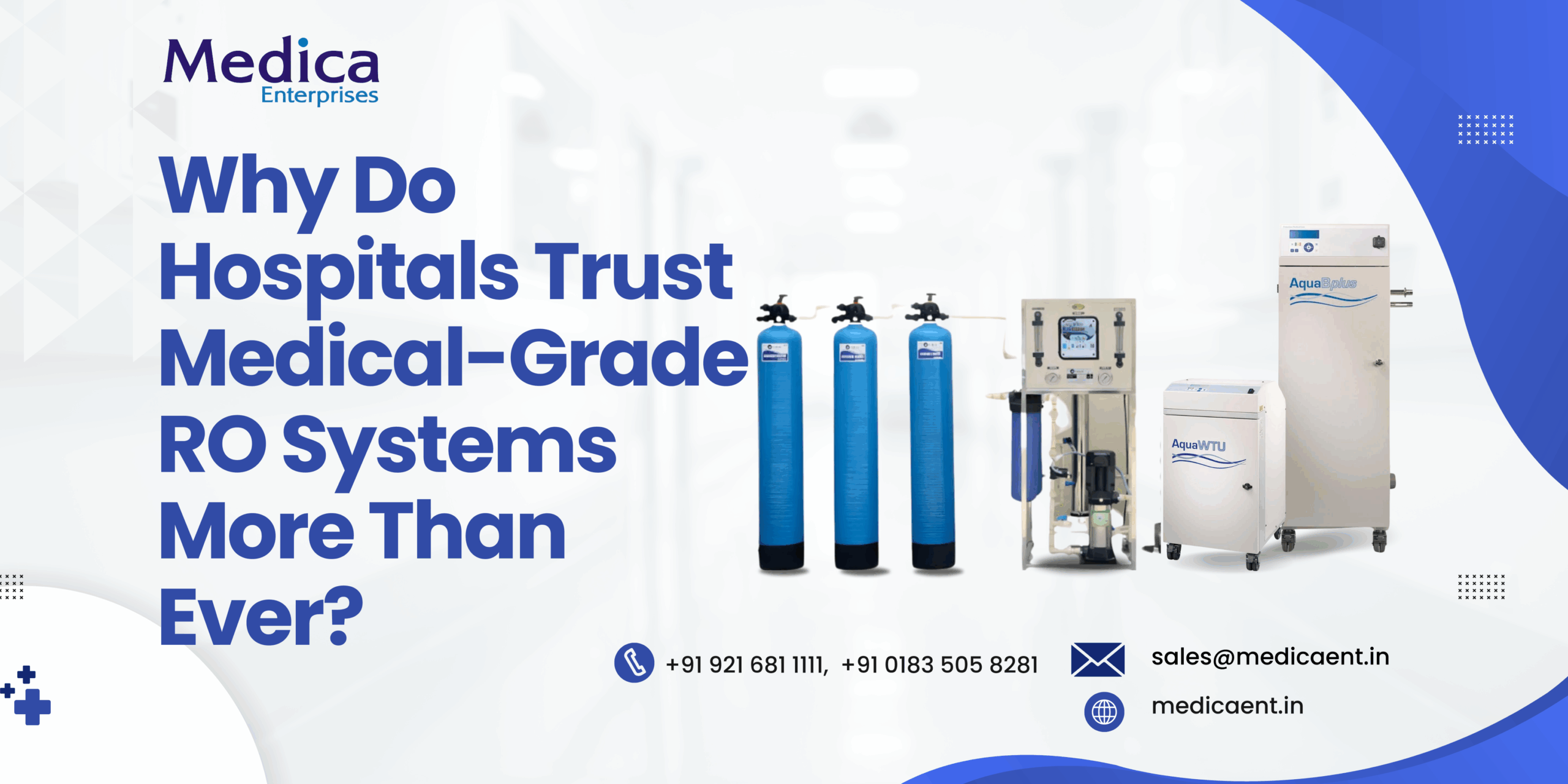
At Medica Enterprises, we understand that hospital operations rely on precision, purity, and uninterrupted performance. Our medical-grade RO systems are designed keeping in mind the critical water demands of healthcare environments.
At Medica Enterprises, we deliver medical-grade RO systems built for precision, purity, and performance—essential for healthcare environments.
- Customized Systems: Tailored RO setups for dialysis units, labs, and other hospital needs.
- Advanced Filtration: Multi-stage purification ensures endotoxin-free, microbiologically safe water.
- Dependable Support: Regular maintenance, AMC services, and real-time monitoring for uninterrupted operation.
- Trusted by Hospitals: Leading healthcare facilities across India rely on Medica for consistent quality and compliance.
With Medica, hospitals don’t just get equipment—they gain a reliable water treatment partner safeguarding patient care.
Conclusion:
In healthcare, every drop of water matters. From dialysis treatment to sterilizing instruments, the quality of water directly impacts patient outcomes and safety. That’s why hospitals today rely on medical-grade RO systems—not as a luxury, but as a necessity.
Medica Enterprises continues to stand at the forefront, empowering hospitals with high-efficiency RO solutions that ensure purity, reliability, and compliance every single day.
Because when it comes to saving lives, water purity isn’t optional—it’s essential.